War Dragons
- 3.8
- Rating
- 10.00M
- Installs
- Free
- Price

 Analysis by App-foxy
War Dragons is the kind of strategy game that makes a strong first impression because it gives me something more active to do than simply wait for buildings to finish. I build a dragon-focused base, raise different creatures, customize my forces, and send them into attacks where timing and target choice matter. That combination makes the opening hours feel more involved than a standard city builder, especially when I want a game I can play in short sessions rather than one long uninterrupted campaign.
After spending time with it, my opinion is more measured. The game has a clear personality and enough layers to keep a strategy fan interested, but its long-term value depends heavily on whether I enjoy routine upkeep, gradual progression, and the pressure to keep improving a collection over time. Its biggest strength is the feeling that my decisions matter during an attack; its biggest weakness is that maintaining progress can begin to feel like a second job.
Why the first week feels so appealing
The opening experience works because it introduces several goals at once without making the game feel like a spreadsheet immediately. I am not only improving a base. I am also thinking about which dragons deserve attention, how to arrange defenses, and how to approach enemy structures. That creates a useful rhythm: prepare, attack, collect results, improve something, then try again.
You May Also Like

 Blood Strike: 2.5 Anniversary
Blood Strike’s Loadouts Turn Every Drop Into a Tactical Gamble
A close look at Blood Strike’s custom loadouts: how fast access to signature weapons reshapes its battle royale rhythm, rewards preparation, and narrows the gap between fights.

 Pandora - Music & Podcasts
Pandora’s Music Is Easy to Start, but Harder to Recover
Pandora’s strength is its low-effort path from a seed to a station. Its weak spot is how much confidence it asks you to place in connection, setup, and quiet recovery.

 8 Ball Pool
 Is Built on Rivalries, Rematches, and Routine
A close look at the rivalries, rematches, shared routines, and unanswered safety questions that turn a quick pool match into a persistent mobile community.

 Samsung Music
’s Quiet Strength Is Playing What You Already Own
Its reach comes less from spectacle than from dependable access to a personal library. That simplicity is both the app’s strongest retention engine and its ceiling.

 AccuWeather: Weather Radar
AccuWeather Review: A Quick, Clear Forecast for Everyday Decisions
For everyday plans, the best forecast is the one you can understand quickly. AccuWeather makes rain timing, radar, and local conditions easy to act on, with a few trade-offs.

 Hill Climb Racing
Why Hill Climb Racing Still Turns Crashes Into One More Run
A tiny car, a bumpy hill and one more upgrade: Hill Climb Racing keeps resurfacing because its simple chaos makes every near-miss feel personal.
More From Our News Desk
View All News


The dragon theme is more than decoration. Each creature gives the strategy a recognizable face, and choosing which one to develop makes progress feel personal. I found myself paying attention to the role a dragon could play rather than treating every unit as an interchangeable upgrade. That is an important distinction from many mobile strategy games, where the setting changes but the underlying routine remains almost identical.
Early battles are also a good introduction to the game’s central appeal. I have to look at a route, decide what deserves attention first, and manage the attack instead of tapping one automatic victory button. That makes a successful run feel earned. Even when the overall progression is familiar, the act of guiding a dragon through an assault gives the game a more hands-on quality than many competing base-building titles.
For a new player, I recommend resisting the temptation to improve everything at once. Concentrating resources on a useful core of dragons and the buildings that support them gives clearer progress than spreading upgrades across every available option. This is one of the first practical lessons I took from the game: a broad collection can look impressive, but a smaller group that I understand is usually easier to use well.
The game is free to start, which makes trying it straightforward. It is listed for Everyone, so its presentation is accessible to a broad audience, although the strategic pressure and purchase options still make it more suitable for players who are comfortable with ongoing progression. Pocket Gems has built it as a persistent mobile game rather than a short, self-contained adventure, and that distinction becomes more important after the novelty wears off.
The first week is also when the customization has its strongest effect. Changing the look and direction of my dragon force gives me a sense of ownership that a conventional strategy board game may not provide. I am not simply solving isolated battles; I am shaping a growing identity inside the game. That personal connection helps explain why the experience can become sticky even before the deeper progression has fully revealed itself.
What to learn before progress becomes complicated
One useful habit is to treat every attack as practice for a specific decision, not just as a chance to collect rewards. I pay attention to which targets slowed me down, where a dragon lost momentum, and whether I committed too early to one route. Reviewing those moments makes later attacks more deliberate. It is a small change, but it prevents the game from becoming a sequence of hurried taps.
I also prefer checking my upgrade priorities before starting a session. If I open the game without a plan, it is easy to spend time moving between menus and making minor improvements that do not change how I play. A short list, such as strengthening one favored dragon or preparing for a particular type of battle, makes the limited time I have feel more productive.
Another non-obvious trade-off is the difference between collecting many dragons and building reliable expertise with a few. The collection side is satisfying, but every additional focus can divide attention. Players who enjoy experimentation may welcome that breadth, while players who want a clean competitive path may find it distracting. I would decide early which style is more enjoyable, because the game can support both but does not make them equally comfortable.
What remains valuable after the first month
The month-to-month question is more demanding than the first-week question. Almost any well-presented mobile strategy game can feel exciting while new dragons, upgrades, and systems are arriving quickly. The real test is whether the daily or weekly loop continues to offer meaningful choices. In my experience, War Dragons has recurring value when I enjoy setting medium-term goals and adjusting my approach as my force develops.
The strongest long-term loop comes from connecting preparation to performance. Improving a dragon is more satisfying when I can feel the difference in a later attack, and strengthening the base matters more when I understand what kind of threat it is meant to answer. That connection gives upgrades a purpose. Without it, progression risks becoming a checklist of timers and buttons.
For someone who plays during a commute or between household tasks, the game can fit naturally into a routine. I might use a short session to inspect progress, make one meaningful upgrade, and plan the next attack. A longer session can then be reserved for active battles. This split is helpful because it means I do not need to treat every visit as a major gaming session.
However, recurring value is not automatic. The game asks me to care about a continuing ecosystem of improvements, and that can feel less rewarding if I prefer campaigns with a definite ending. Players who enjoy finishing a story and moving on may be happier with a premium strategy game or a compact tactical title. Those alternatives usually offer less collection maintenance, but they also avoid the sense that progress is waiting for me whenever I return.
The game’s average rating is 3.8 from around 164 thousand ratings, with roughly 24 thousand written reviews. I read that overall response as a sign of a divided but substantial audience: enough players find the formula compelling to stay engaged, while others likely run into the familiar frustrations of persistent free-to-play strategy. It has passed 10 million installs, so finding an active-looking player ecosystem is not the main concern for someone deciding whether to try it.
One of my favorite long-term habits is keeping a simple record of why I am upgrading something. That might mean noting whether a choice improves attack reliability, strengthens defense, or simply supports a dragon I enjoy using. This sounds unnecessary, but it helps separate strategic progress from impulse spending or random menu activity. The game presents many reasons to keep improving; my own priorities determine whether those improvements feel coherent.
Where the recurring strategy is strongest
The game is at its best for players who like a mixture of collection and tactical execution. I get more from it when I compare outcomes, refine a route, and think about how a dragon’s strengths fit a particular situation. Someone who only wants to watch numbers rise may find the active battle layer unnecessary, while someone who wants a pure tactics game may find the persistent base progression too heavy.
It also works well as a social conversation piece among friends who already enjoy mobile strategy. Sharing observations about useful dragons, difficult attacks, or inefficient upgrades can make the routine more engaging. I would not choose it solely for social interaction, but a shared interest can give the longer progression a reason to matter beyond my individual account.
The comparison with ordinary city builders is revealing. Those games often make me focus on production chains, population, or building placement. War Dragons shifts the emotional center toward the creatures themselves and the moment-to-moment attack. Compared with a traditional turn-based strategy game, it offers less of a clean match structure and more of a continuing personal project. That makes it more convenient for mobile play, but also more exposed to repetition.
The maintenance burden behind the spectacle
Persistent games need attention, and this one is no exception. The burden is not only the number of actions; it is the need to remember what matters. I have to keep track of which dragons I am developing, which improvements support my current approach, and whether a new opportunity is genuinely useful or merely tempting. That mental overhead grows as the account becomes more established.
The most comfortable way to manage it is to create a routine with clear limits. I suggest checking the game at times that already exist in your day rather than allowing it to interrupt everything else. For example, I might review progress after breakfast and play an active battle later, instead of reopening the app whenever I remember that something may be ready. This keeps the game enjoyable and reduces the feeling of being managed by it.
Players should also approach the purchase system carefully. The game is free, but individual in-app purchases range from $0.99 to $99.99. That wide span means the important question is not whether the game costs anything to download; it is whether the player can maintain a comfortable boundary around optional spending. I would decide that boundary before becoming invested in a particular dragon or upgrade path.
For me, the best rule is to regard purchases as convenience rather than a requirement for emotional progress. If I start viewing every delay as a problem that money should solve, the strategy layer becomes less satisfying. The game is more enjoyable when I can accept that some progress will take patience and reserve spending for a deliberate choice rather than a frustrated reaction.
Another maintenance issue is device compatibility. The current version is 9.70+gn and requires Android 8.0 or later. That is useful to check before planning to play on an older phone or tablet. On a supported device, I would still keep enough free space and battery for regular sessions, because a persistent strategy game is most convenient when it is easy to open and return to consistently.
The game’s release history also matters to my expectations. It arrived on April 12, 2016, so this is not a new experiment that I should approach expecting a short burst of novelty. It is an established, ongoing product with a mature progression mindset. That can be reassuring for a player who wants something to return to, but less appealing to someone looking for a fresh design with minimal accumulated complexity.
When the routine starts to feel tiring
Fatigue usually appears when preparation stops leading to interesting decisions. If I am repeatedly opening the game only to collect, upgrade, and close it, the active dragon battles no longer feel like the center of the experience. At that point, the game has become maintenance with occasional action, and I would rather reduce my schedule than force myself to keep up.
Another source of tiredness is the tension between experimentation and efficiency. Trying a less familiar dragon can be fun, but it may feel wasteful if my resources are limited and my main goal is steady advancement. On the other hand, using the same dependable choices every time can make the battles predictable. The game asks me to choose between novelty and optimization more often than I expected.
There is also a natural risk in any collection-driven strategy game: the collection can become the task. New additions are exciting at first, but they also create more decisions about development and use. I recommend keeping a small “active roster” for regular play and treating everything else as an experiment. That approach preserves variety without allowing the entire collection to become a maintenance list.
Players who dislike timers, repeated resource management, or spending pressure should think carefully before committing. The dragon theme may attract them, but the long-term structure still asks for patience and regular attention. A one-time purchase strategy game is likely a better fit if the goal is uninterrupted play without a persistent upgrade economy.
By contrast, players who enjoy gradual improvement may find the repetition comforting rather than exhausting. I like having a familiar project waiting for me, especially when I can return after a busy day and make one clear decision. The same structure that frustrates a player seeking constant surprise can satisfy someone who likes watching a long plan take shape.
Who should keep it installed
I would recommend War Dragons to a player who wants a free strategy game built around dragons, active attacks, customization, and ongoing progression. It is particularly suitable for someone who enjoys improving a small group of favorites, learning from failed assaults, and returning regularly to a developing base. The game offers enough structure to become a habit without requiring every session to be long.
I would be more cautious recommending it to someone who wants a finished experience, a purely tactical ruleset, or a game that can be mastered without routine upkeep. It is also not my first choice for anyone who finds optional purchases distracting or who tends to spend when progress feels slow. In those cases, a paid strategy game with a defined campaign may provide better value even if it has fewer dragons and less ongoing customization.
The age rating of Everyone makes the presentation broadly approachable, but that should not be confused with a completely casual design. The strategic decisions, collection management, and long-term economy require a certain willingness to plan. I would describe it as accessible to start, yet increasingly demanding for anyone who wants to optimize rather than simply experiment.
My practical advice is to give the opening a fair trial while watching my own habits. Do I look forward to planning attacks, or do I only want the next reward? Am I improving dragons because I have a strategy, or because the menu offers another button? Those answers reveal more about the game’s fit than the theme alone.
After the novelty fades, the product earns its space only when I use its systems intentionally. A focused roster, a limited play schedule, and a clear spending boundary make a noticeable difference. Without those habits, the same depth can turn into clutter and obligation.
My long-term verdict is positive but selective. War Dragons is not a lightweight distraction that stays fresh automatically, and it is not the best alternative for every strategy fan. Its lasting appeal comes from the connection between dragon development and active attacks, while its main costs are time, attention, and patience. I would keep it installed if I wanted a continuing mobile project with a strong creature-collection identity. I would remove it if the routine began to feel like maintenance rather than play.
For me, that is a fair result. Pocket Gems has made a game with enough tactical personality to stand apart from a routine builder, but the player has to manage the ongoing structure instead of letting it manage them. If you enjoy that bargain, the free download is an easy way to test the fit. If you want a complete strategy adventure with a clear finish line, another option will probably serve you better.
FAQs for War Dragons
01What is War Dragons and how does the gameplay work?
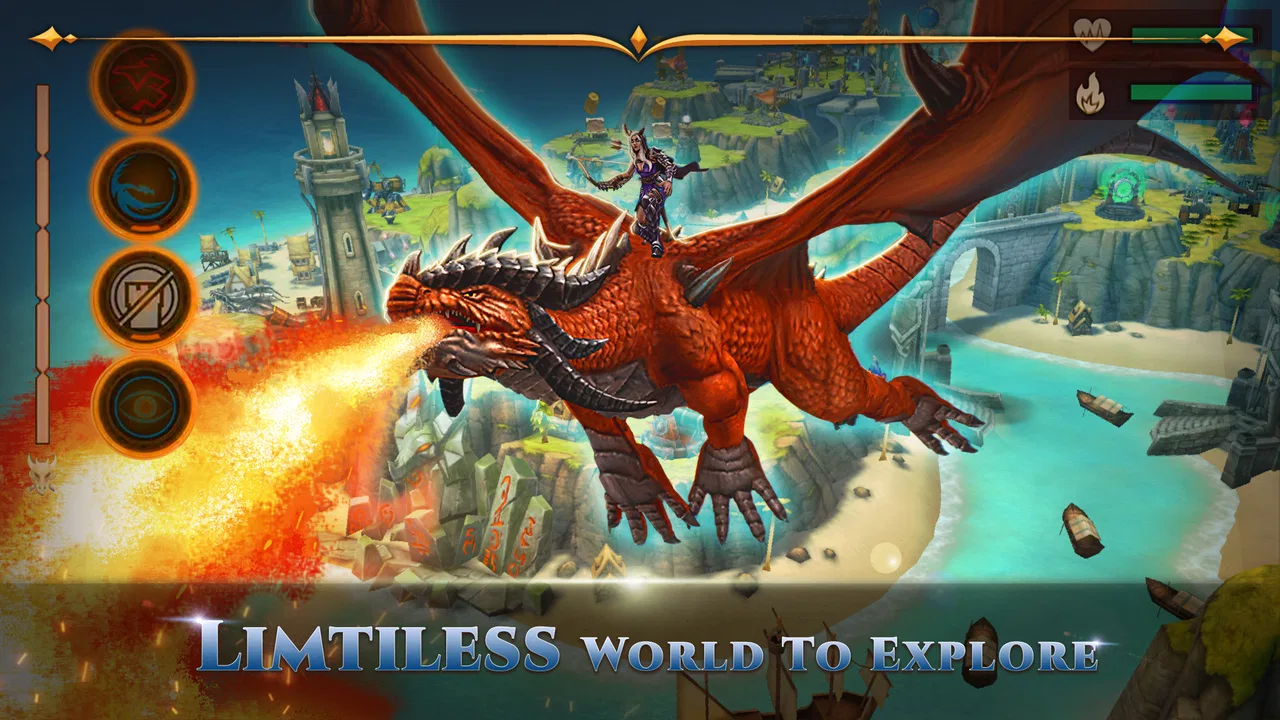
War Dragons is a real-time strategy and dragon-collecting game in which you build and defend an island, hatch and train dragons, and attack enemy bases. During raids, you directly guide your dragon, choosing spells and targets while destroying defenses. The game combines action combat, resource management, breeding, missions, and alliance-based events, so progression involves both individual skill and long-term planning.
02Is War Dragons free to download and play?
Yes, War Dragons is free to download on supported Android and iOS devices. However, it uses optional in-app purchases for items such as resources, speed-ups, chests, and other progression-related benefits. You can play without spending money, but upgrading dragons, buildings, and research may take considerable time. Parents should also enable purchase restrictions if children use the device.
03Does War Dragons require an internet connection?
War Dragons is primarily an online game and requires a stable internet connection for most important features. Attacks, events, alliance activities, cloud-based progress, and purchases depend on communication with the game servers. It is not designed as a fully offline experience, so mobile data or Wi-Fi is needed. Connection quality can also affect loading times and the smoothness of real-time battles.
04Can I play War Dragons with other players?
Yes, multiplayer interaction is one of War Dragons’ central features. You can join an alliance, communicate with teammates, participate in cooperative events, and compete against other players’ islands. Alliance members can provide support and coordinate strategies, making social participation especially useful for progression. If you prefer playing alone, you can still complete many activities, but you may miss some of the strongest rewards.
05Is War Dragons suitable for children and new strategy-game players?
War Dragons is accessible to beginners because its early missions explain the basic controls, dragon attacks, island construction, and upgrade systems. Nevertheless, the game becomes increasingly complex as you manage breeding paths, defensive layouts, resources, events, and alliance responsibilities. It includes competitive features and in-app purchases, so parents should review the age rating, spending settings, and online interaction options before allowing younger players to use it.
Pros
- Real-time dragon battles make each attack feel dynamic and strategic.
- A wide variety of dragons encourages experimentation with different team setups.
- Guild events add cooperative goals and give active players extra rewards.
- Base building provides meaningful defensive choices between battles.
- Regular content updates help keep the game feeling fresh over time.
Cons
- Progress can feel slow without spending money on upgrades and resources.
- Battles may become repetitive once familiar attack patterns are mastered.
- The game requires a stable connection for most features and combat.
- Energy and timers can limit how often you can play in one session.
- Large guild and event commitments may be demanding for casual players.

War Dragons
Gallery